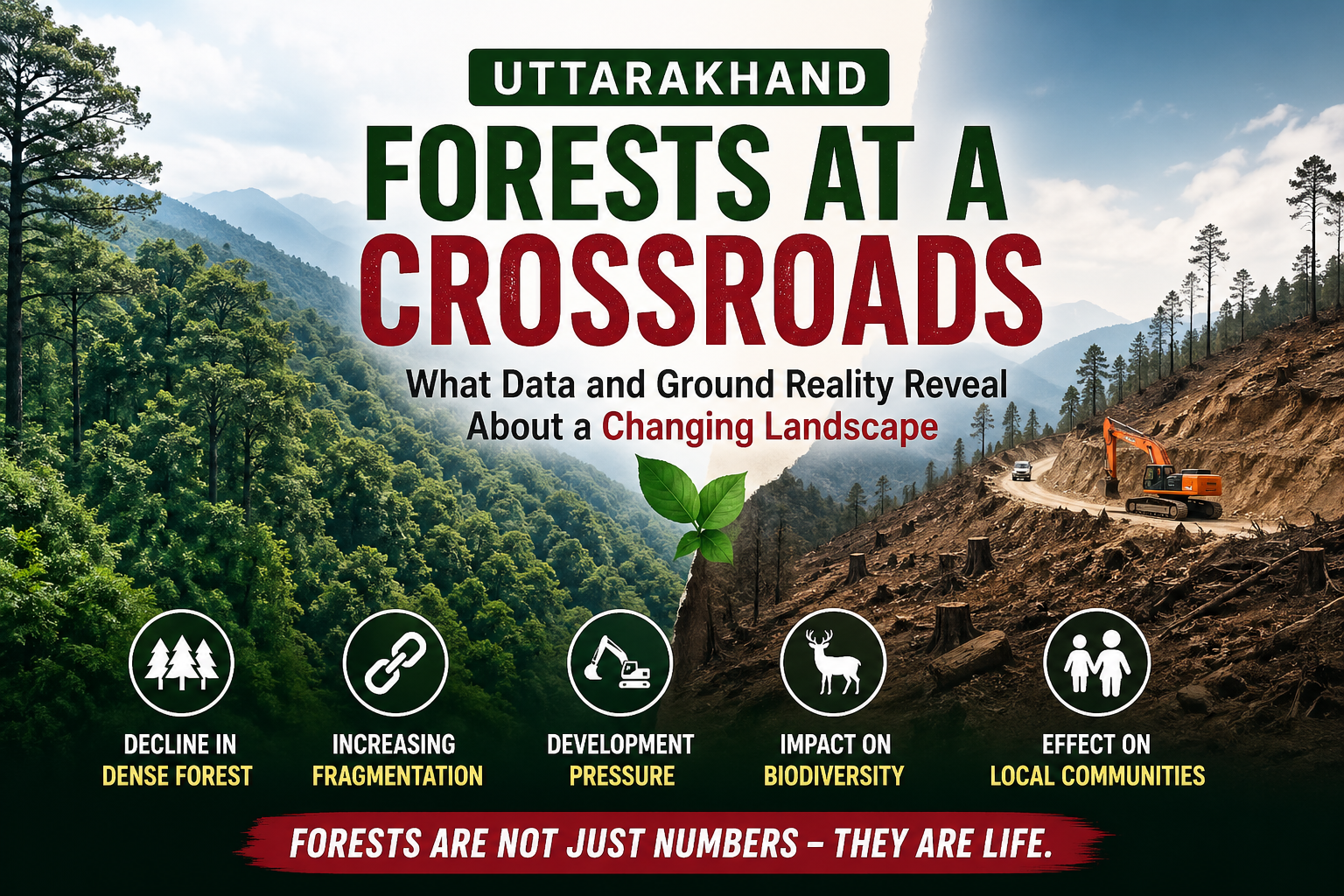
Uttarakhand forest cover changes are subtle — but their impact could be significant.
Uttarakhand forest cover changes are happening quietly — but their long-term impact could be significant. Forests in Uttarakhand are essential for biodiversity, climate balance, and local livelihoods. Learn more about forest ecosystems from the World Wildlife Fund.
However, increasing development activities are affecting forest quality. Also read: Uttarakhand River Mining Impact
Table of Contents
- Introduction
- Forest Data vs Reality
- Satellite Observations
- Development Pressure
- Biodiversity Impact
- Environmental Risks
- Community Impact
- Conclusion
Introduction
Uttarakhand forest cover changes are becoming a growing concern among environmental experts. While official reports suggest that overall forest cover remains stable, ground-level observations reveal a different story.
Forests in Uttarakhand are essential for biodiversity, climate balance, and local livelihoods. However, increasing development activities are affecting forest quality.
1. Forest Data vs Ground Reality
Although total forest area appears stable, several changes are visible:
- Dense forest areas are slightly declining
- Open and degraded forests are increasing
- Forest fragmentation is becoming more common
These patterns highlight the difference between forest quantity and quality.
2. Satellite Observations
Modern tools like GIS and satellite imagery show deeper insights:
- Breaks in continuous forest cover
- Reduced wildlife corridors
- Increased human interference
This indicates that forest connectivity is weakening over time.
3. Development Pressure
Infrastructure growth is a major factor influencing forest conditions.
Key contributors include:
- Road expansion
- Hydropower projects
- Tourism development
These activities increase pressure on forest land and ecosystems.
4. Biodiversity Impact
Forest fragmentation directly affects wildlife:
- Disrupted movement patterns
- Increased human-wildlife conflict
- Loss of natural habitats
This makes conservation more challenging.
5. Environmental Risks
Forests play a crucial role in environmental stability.
Changes can lead to:
- Soil erosion
- Increased landslides
- Altered rainfall absorption
Even small shifts can have large consequences in hilly regions.
6. Community Impact
Local communities depend heavily on forests for:
- Fuelwood
- Fodder
- Livelihood resources
Declining forest quality affects daily life and sustainability.
Key Questions
- Are we focusing only on forest area, not quality?
- Can development and conservation work together?
- What will forests look like in the next decade?
Conclusion
Uttarakhand forest cover changes are gradual but important. While forests may not be disappearing rapidly, their structure and health are changing.
Understanding these shifts is essential for maintaining ecological balance.