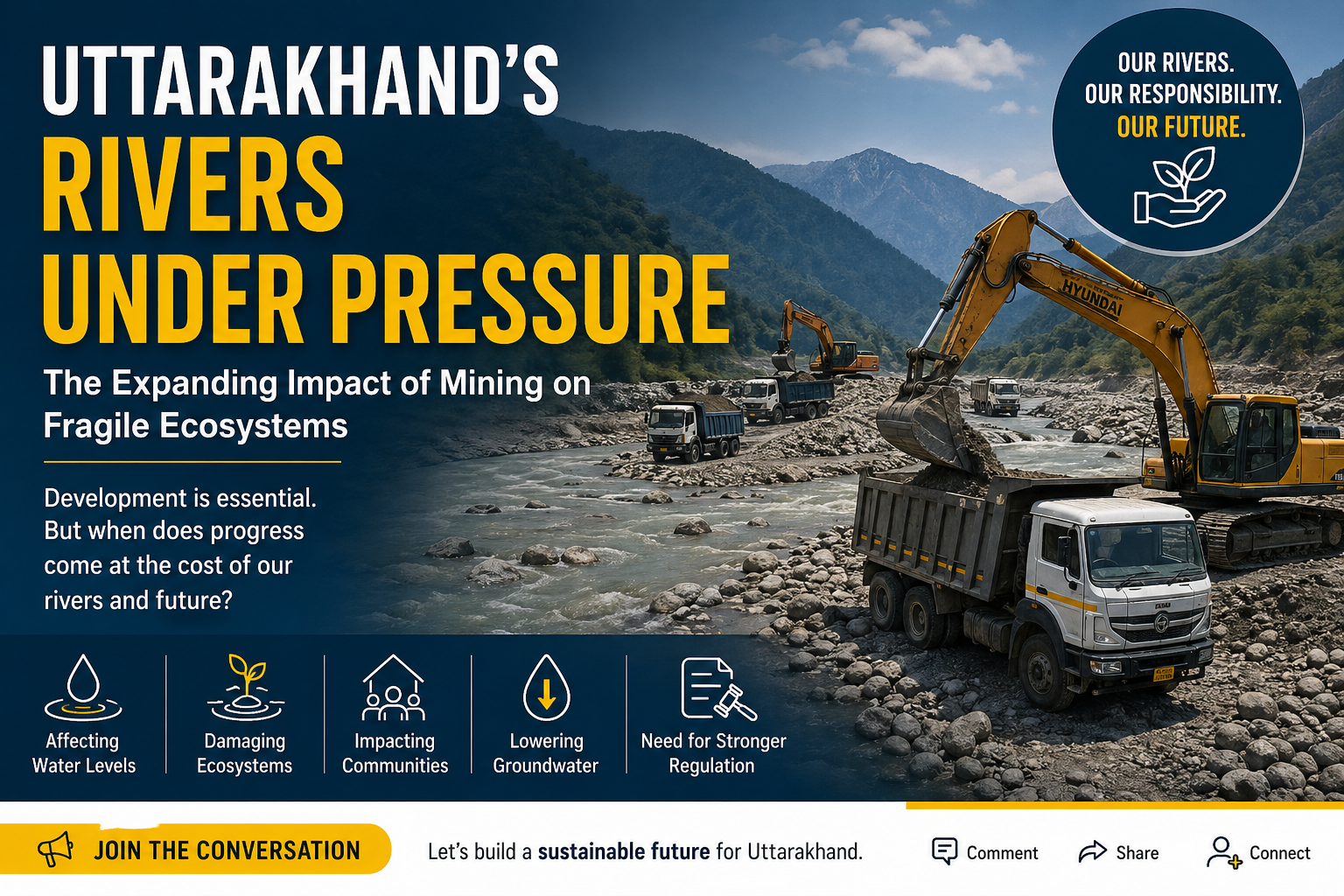
Uttarakhand River Mining Impact: Growing Pressure on Fragile Rivers
Uttarakhand River Mining Impact: 7 Key Facts You Should Know
The Uttarakhand river mining impact is becoming increasingly visible — and the consequences may be deeper than they appear.
Table of Contents
- Introduction
- Rising Mining Activity
- Environmental Effects
- Groundwater Impact
- Community Challenges
- Economic Balance
- Key Questions
- Conclusion
Introduction
Rivers in Uttarakhand play a crucial role in maintaining ecological balance, supporting agriculture, and recharging groundwater. However, the Uttarakhand river mining impact is now drawing attention due to increasing extraction of sand and gravel.
You can learn more about river ecosystems from the World Wildlife Fund
As demand for construction materials rises, riverbeds are facing growing pressure. This raises an important question — how much mining is sustainable?
1. Rising Mining Activity
Riverbed mining has increased in areas like Haridwar and Udham Singh Nagar. Reports and ground observations suggest higher activity levels, including heavy vehicle movement and frequent extraction cycles.
While mining is regulated, the scale of operations has expanded, contributing to the overall Uttarakhand river mining impact.
2. Environmental Effects
The environmental impact of mining is gradual but significant.
Key Changes Observed:
- Riverbeds becoming deeper
- Natural sediment flow getting disturbed
- Aquatic ecosystems facing stress
- Possible changes in flood patterns
These effects show how sand mining environmental effects can disrupt natural systems over time.
3. Groundwater Impact
One of the less visible aspects of the Uttarakhand river mining impact is its effect on groundwater. When riverbeds are excessively mined, water retention reduces. This directly affects groundwater recharge, leading to declining water levels in nearby areas.
Read more: Water Crisis in India
4. Community Challenges
Local communities often experience the effects first.
Common Concerns:
- Dust and noise from mining vehicles
- Reduced availability of water
- Impact on farming conditions
Although mining contributes to local economies, its side effects can create long-term challenges.
5. Economic Balance
Mining supports infrastructure and generates employment. However, sustainability depends on maintaining a balance between extraction and natural replenishment.
The Uttarakhand river mining impact highlights the need to align economic growth with environmental limits.
6. Key Questions
- Are current mining practices sustainable?
- Is monitoring strong enough?
- What will these rivers look like in the future?
These questions are central to understanding the long-term impact.
7. Why This Issue Matters
Uttarakhand’s rivers are part of a larger ecosystem that supports millions of people. Any disruption here can have wider environmental consequences.
Conclusion
The Uttarakhand river mining impact is not just an environmental issue — it is a sustainability challenge.
Rivers are resilient, but they have limits. Maintaining balance is essential to ensure that development does not lead to irreversible damage.