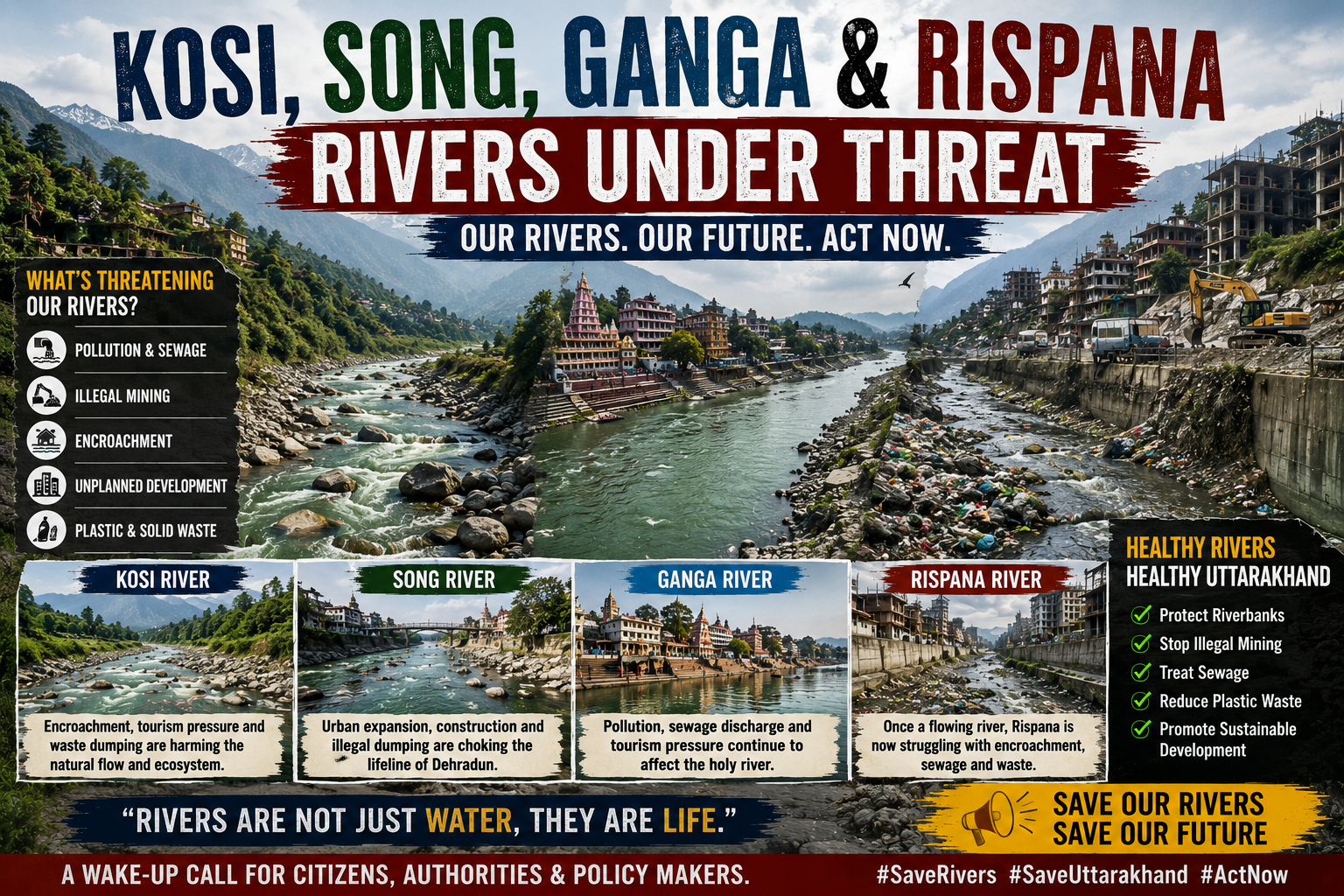
Kosi Song Ganga Rispana Rivers Under Threat: 7 Dangerous Truths About Uttarakhand’s Water Crisis
Kosi Song Ganga Rispana Rivers Under Threat due to pollution, illegal mining, sewage, and unplanned development in Uttarakhand. Read the full ground report.
Kosi, Song, Ganga & Rispana Rivers Under Threat: Is Uttarakhand Facing a Water Ecology Crisis?
The rivers of Uttarakhand are more than just water bodies.
They are lifelines of the Himalayas.
From the sacred Ganga to local rivers like Kosi, Song, and Rispana, these rivers support forests, wildlife, agriculture, drinking water, tourism, and millions of people downstream.
But today, many of these rivers are facing growing environmental pressure.
Pollution, illegal mining, encroachment, sewage discharge, and uncontrolled construction are slowly damaging the fragile river ecosystems of Uttarakhand.
The question now is serious:
Are Uttarakhand’s rivers approaching an ecological crisis?
Why Uttarakhand’s Rivers Are Important
The rivers of Uttarakhand are essential for:
- Drinking water
- Agriculture
- Hydropower
- Biodiversity
- Religious tourism
- Groundwater recharge
- Himalayan ecology
Many rivers originate from glaciers and forests that are already vulnerable to climate change and human activity.
Experts warn that once these river systems are damaged, recovery becomes extremely difficult.
Kosi River Under Pressure
The Kosi River, flowing through the Kumaon region, has long been known for its ecological importance and natural beauty.
However, increasing tourism and construction activities near the river belt are creating serious concerns.
Locals and environmental groups have raised issues related to:
- Riverbank encroachment
- Waste dumping
- Sand and stone extraction
- Resort construction near river zones
- Water pollution during tourist seasons
Many fear that unchecked development could permanently damage the Kosi river ecosystem.
Song River Facing Rapid Urban Pressure
The Song River near Dehradun is witnessing rapid urban expansion.
Construction activities, road development, and increasing population pressure are impacting the river corridor.
Key concerns include:
- Illegal dumping
- Reduced water flow
- Construction debris
- Encroachment along riverbanks
- Shrinking natural recharge zones
Environmental experts warn that rivers around urban centers are becoming increasingly vulnerable due to poor planning and weak enforcement.
Ganga River and the Pressure of Tourism & Pollution
The Ganga is not only a river — it is a spiritual and cultural identity for millions.
But despite multiple conservation campaigns, several sections of the river continue to face pollution pressure.
Challenges include:
- Untreated sewage discharge
- Plastic waste
- Religious waste dumping
- Hotel and tourism pressure
- Industrial pollution in downstream regions
During peak tourism and pilgrimage seasons, waste generation increases significantly in many riverfront areas.
The concern is not only about pollution.
It is about protecting the long-term health of one of India’s most important river systems.
Reference:
National Mission for Clean Ganga
Rispana River: From River to Drain?
The Rispana River in Dehradun has become one of the biggest examples of river degradation in Uttarakhand.
Once considered a flowing river system, many parts of Rispana now struggle with:
- Encroachment
- Sewer discharge
- Plastic waste
- Illegal settlements
- Concrete expansion
Experts repeatedly warn that if urban rivers are ignored, cities may face severe flooding and water crises in the future.
The condition of Rispana also reflects the larger environmental challenges facing Himalayan cities.
Illegal Mining and River Ecology
Illegal mining remains one of the biggest threats to several rivers across Uttarakhand.
Unregulated extraction of sand, gravel, and stones can:
- Damage riverbeds
- Increase erosion
- Destroy aquatic habitats
- Reduce groundwater recharge
- Increase flood vulnerability
Environmental activists have repeatedly demanded stricter monitoring and enforcement against illegal mining activities.
Climate Change Is Increasing the Risk
Climate change is making Himalayan rivers even more vulnerable.
Experts warn about:
- Glacial retreat
- Erratic rainfall
- Flash floods
- Water scarcity
- Changing river flow patterns
Combined with unplanned development, these changes could create long-term ecological instability.
Kosi Song Ganga Rispana Rivers Under Threat: Why This Matters
The issue is not only environmental.
Healthy rivers are directly linked to:
- Public health
- Agriculture
- Tourism
- Wildlife
- Disaster prevention
- Water security
If Himalayan rivers continue degrading, the impact will extend far beyond Uttarakhand.
Can Uttarakhand Protect Its Rivers?
Environmental groups and local communities are demanding:
- Stronger river protection laws
- Action against illegal mining
- Better sewage management
- Eco-sensitive development policies
- River restoration projects
- Strict monitoring of construction near river zones
Many experts believe sustainable development is possible — but only with long-term planning and accountability.
Conclusion
The growing crisis surrounding the Kosi Song Ganga Rispana Rivers Under Threat debate reflects a larger environmental warning for Uttarakhand.
Rivers are not endless resources.
They are fragile ecosystems that sustain both nature and human life.
If pollution, encroachment, and unplanned development continue unchecked, the Himalayan state could face severe ecological consequences in the coming years.
The real challenge now is simple:
Can Uttarakhand protect its rivers before the damage becomes irreversible?
CTA Section
What Do You Think?
Should stricter action be taken against river pollution, illegal mining, and encroachment in Uttarakhand?
Share your opinion in the comments below and join the conversation on protecting Himalayan rivers.
Read More Ground Reports:
The Shivalik