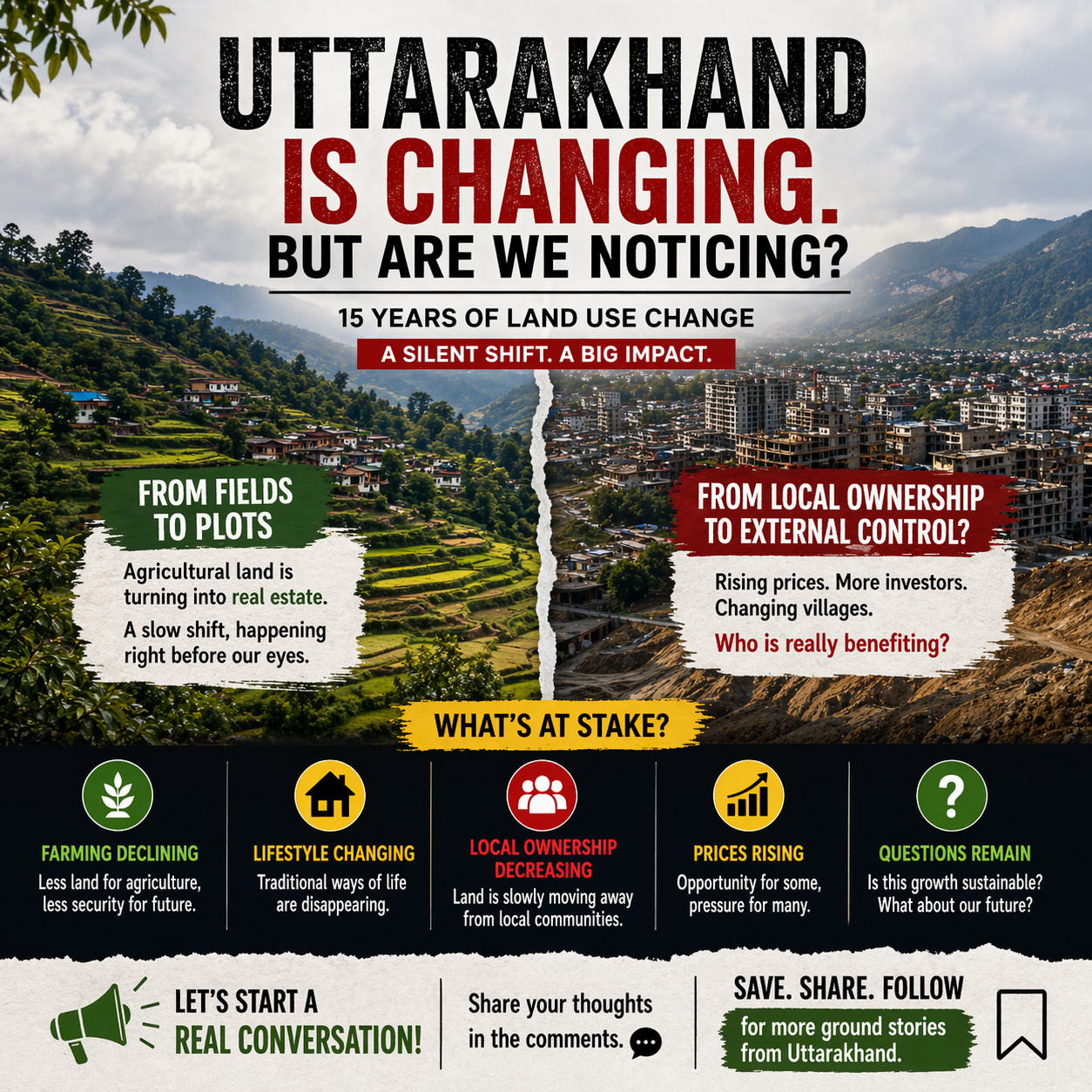
Uttarakhand Land Crisis: 15-Year Land Use Change & Ownership Shift Explained
Land is no longer just livelihood — it is now a high-value investment.
Uttarakhand Land Crisis Overview
The Uttarakhand Land Crisis has become one of the most discussed issues in recent years. Over the past 15 years, the state has seen rapid changes in land use, ownership patterns, and real estate demand.
Agricultural land is gradually converting into residential plots and commercial spaces. Tourism growth and infrastructure development have accelerated this transformation.
But beyond development, the Uttarakhand Land Crisis raises a deeper concern — who owns the land today, and who is losing it?
Land Use Change in Uttarakhand
The Uttarakhand Land Crisis is closely linked to changing land use patterns. In regions like Dehradun and Nainital:
- Farmland is being converted into plots
- Villages are becoming urban extensions
- Resorts and homestays are increasing
This shift follows a clear pattern:
Road development → Tourism growth → Real estate expansion
Land is no longer just a livelihood resource. It is now an investment asset.
Rising Land Prices and Real Estate Growth
A key driver of the Uttarakhand Land Crisis is the rapid rise in land prices.
While some locals benefit financially, others face pressure due to:
- Increasing cost of living
- Limited employment opportunities
- Immediate need for cash
This leads to gradual selling of land, contributing to ownership change. For official land records and policies, refer to Uttarakhand Government
Ownership Shift in Uttarakhand
One of the most critical aspects of the Uttarakhand Land Crisis is the shift in ownership.
Local ownership is decreasing, while external investors are increasing.
Factors behind this trend:
- Migration from hill areas
- Rising property demand
- Real estate investment opportunities
This is not a sudden change — it is a slow, continuous transition.
Impact on Local Communities
The Uttarakhand Land Crisis is not just economic — it is social and cultural.
When land is sold:
- Farming declines
- Traditional lifestyles change
- Migration increases
- Local identity weakens
Land in Uttarakhand is deeply connected to heritage and belonging.
Development vs Sustainability
Development has brought benefits:
- Better roads
- Increased tourism
- Economic growth
However, the Uttarakhand Land Crisis highlights an imbalance. The key issue is not development itself, but whether it is sustainable and inclusive. For broader environmental context, see UN Environment Programmed.
Key Questions Around Uttarakhand Land Crisis
- Is local land ownership declining in Uttarakhand?
- Is real estate growth sustainable in mountain regions?
- Who benefits the most from rising land prices?
Conclusion
The Uttarakhand Land Crisis is a complex issue involving development, opportunity, and risk.
If current trends continue without balanced planning, the long-term impact may affect not only the economy but also culture and sustainability.
What do you think about the Uttarakhand Land Crisis?
Is this development or a silent ownership shift?
Are local communities being left behind?
Comment your opinion
Share this post to spread awareness
Follow for more insights on Uttarakhand land use and real estate trends