7 Alarming Truths Behind “Devbhoomi ya Business Bhoomi?” in Uttarakhand
Devbhoomi ya Business Bhoomi? The Changing Face of Uttarakhand
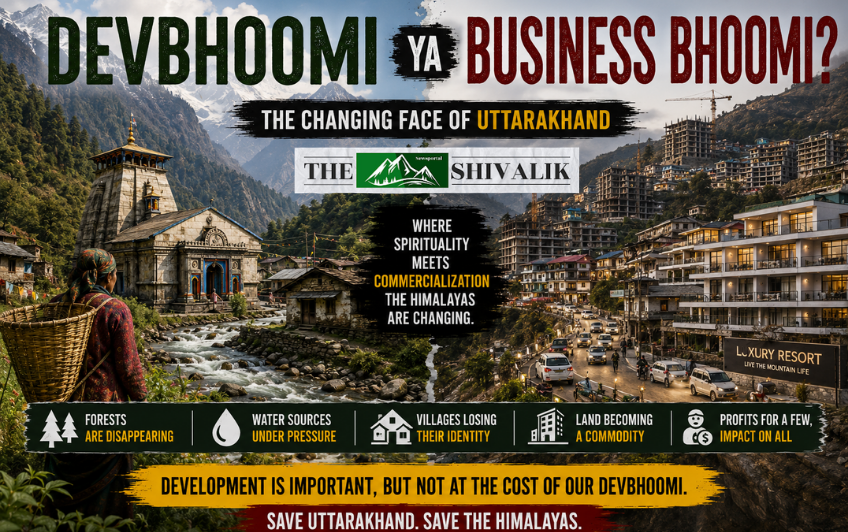
For generations, Uttarakhand has been known as Devbhoomi. The Land of Gods. A place of spirituality, forests, rivers, temples, and peaceful mountain life. But today, many people across the state are asking a difficult question.
Reference:
Ministry of Environment, Forest and Climate Change
Is Uttarakhand still Devbhoomi… or is it becoming a Business Bhoomi?
From luxury resorts and massive land deals to overcrowded tourism and aggressive commercialization, the Himalayan state is changing rapidly.
The mountains that once symbolized peace and nature are now increasingly becoming investment hotspots.
Tourism Boom or Commercial Expansion?
Tourism is one of Uttarakhand’s biggest economic sectors. Every year, millions of tourists visit places like:
- Kedarnath
- Badrinath
- Mussoorie
- Nainital
- Rishikesh
- Auli
But along with tourism growth, commercial pressure has also increased.
Today, hill regions are witnessing:
- Rapid hotel and resort construction
- Hill cutting and forest loss
- Rising land prices
- Traffic congestion
- Water shortages
- Commercial expansion into rural areas
Many locals fear that uncontrolled tourism is damaging the natural identity of the Himalayas.
Devbhoomi ya Business Bhoomi: Why the Debate Is Growing
The debate around Devbhoomi ya Business Bhoomi is not only emotional — it is environmental, cultural, and economic.
Several concerns are now being raised across Uttarakhand:
Forests Under Pressure
Large-scale construction projects are increasing pressure on forests and biodiversity.
Rivers and Water Sources at Risk
Tourism and resort expansion are putting stress on fragile Himalayan water systems.
Villages Losing Identity
Traditional villages are slowly changing into commercial tourism zones.
Land Becoming a Commodity
Agricultural and ancestral land is increasingly being sold for resorts, villas, and investment projects.
The Rise of Resort Culture in Uttarakhand
Across many hill districts, luxury resorts and homestays are expanding rapidly.
Areas like Mukteshwar, Mussoorie, Tehri, and Ranikhet are witnessing large-scale tourism-related construction.
Critics argue that:
- Profits often go to outsiders
- Locals receive limited long-term benefits
- Ecological damage remains permanent
Related Read: Resort Mafia vs Local Villages – The Shivalik
Outsider Land Purchase and Real Estate Pressure
The growing demand for mountain property has triggered a major real estate boom in Uttarakhand.
Luxury villas, retirement homes, and tourism investments are increasing rapidly across hill stations.
This has created concerns about:
- Rising land prices
- Local displacement
- Illegal construction
- Environmental imbalance
- Water crises in mountain regions
Related Investigation: Outsider Land Purchase in Uttarakhand – The Shivalik
Is Development Necessary? Yes. But at What Cost?
Development is important for jobs, infrastructure, and economic growth.
But environmental experts warn that Himalayan regions are ecologically fragile and cannot sustain unlimited commercial expansion.
The challenge is not whether Uttarakhand should develop.
The real challenge is:
Can development happen without destroying Devbhoomi?
Environmental Risks Are Increasing
Rapid and unplanned development can increase:
- Landslide risks
- Flash floods
- Forest destruction
- Water scarcity
- River pollution
- Traffic and waste problems
Several recent disasters in Uttarakhand have already shown how vulnerable Himalayan ecosystems are.
What Do Local Communities Want?
Many local residents are not against tourism or development.
But they demand:
- Sustainable tourism policies
- Protection of forests and rivers
- Better land regulations
- Local employment opportunities
- Strong action against illegal construction
- Development that benefits mountain communities
The fear is simple:
Uttarakhand should not lose its identity in the race for profit.
Conclusion
The debate around Devbhoomi ya Business Bhoomi reflects a deeper concern about Uttarakhand’s future.
The Himalayas are not just tourism destinations or investment zones.
They are living ecosystems, spiritual centers, and ancestral homes for millions.
The question now is not whether change is happening.
The question is whether Uttarakhand can protect its natural and cultural identity before commercialization changes it forever.
What Do You Think?
Is Uttarakhand still Devbhoomi, or is it slowly becoming a Business Bhoomi?
Share your opinion in the comments below and join the conversation about the future of the Himalayas.
Read More Ground Reports:
The Shivalik