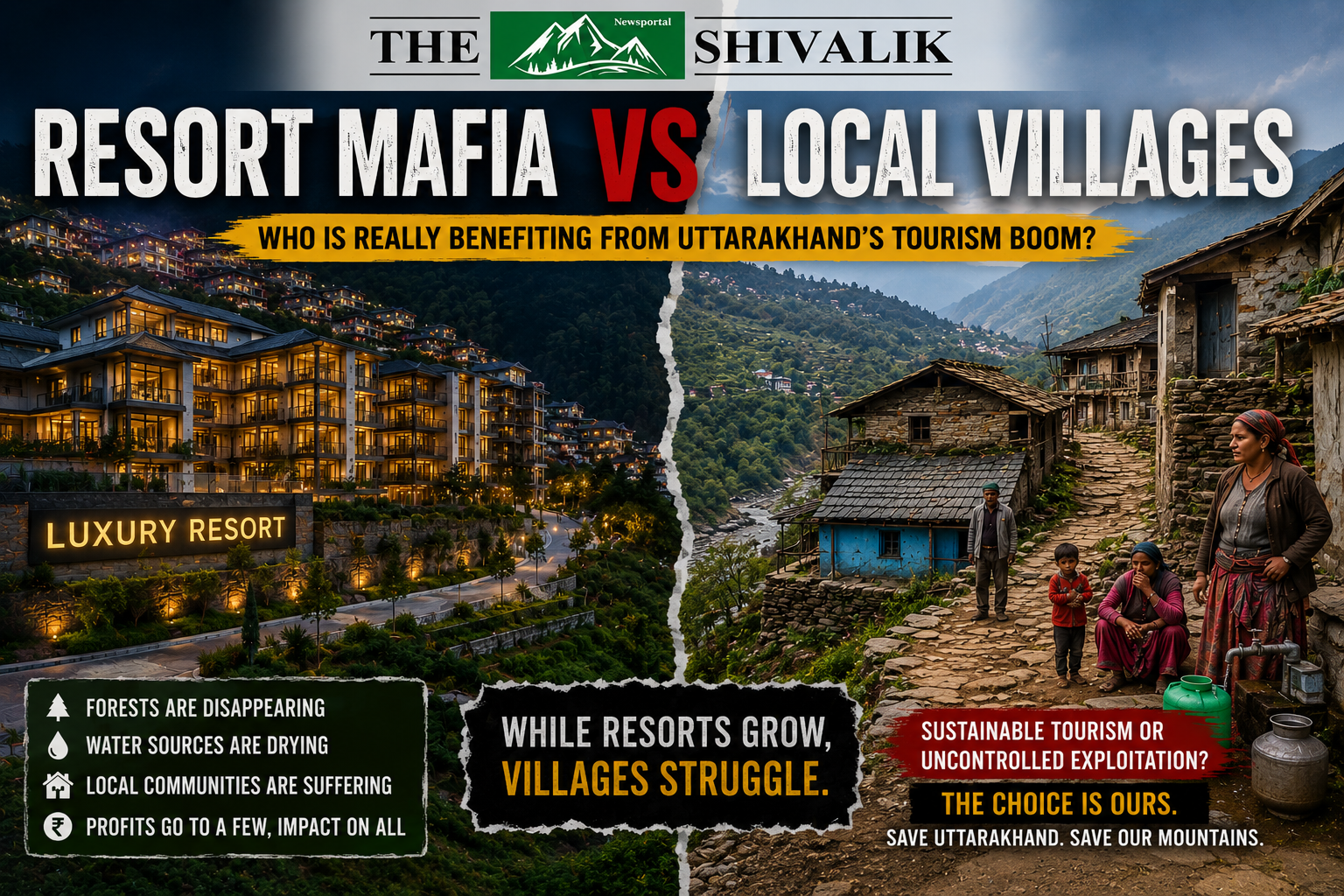
Resort Mafia vs Local Villages: Is Uttarakhand’s Tourism Boom Destroying Mountain Communities?
9 Dangerous Truths About Resort Mafia vs Local Villages in Uttarakhand. Resort expansion in Uttarakhand is increasing pressure on forests, water sources, and local villages. Discover how uncontrolled tourism is changing Himalayan communities.
Uttarakhand’s mountains are witnessing a silent transformation. Across popular hill regions, luxury resorts, private villas, homestays, and commercial tourism projects are rapidly replacing forests, farms, and traditional villages.
What was once peaceful Himalayan land is now becoming a high-profit tourism business zone.
And at the center of this growing debate is one disturbing question:
Are local villages being pushed aside by the resort mafia?
From Mussoorie to Mukteshwar, Rishikesh to Tehri, many residents claim that uncontrolled resort expansion is increasing pressure on water sources, forests, roads, and local livelihoods.
Why Resort Construction Is Increasing Rapidly in Uttarakhand
The tourism industry in Uttarakhand has grown aggressively in recent years because of:
- Rising tourist demand
- Social media-driven travel culture
- Work-from-mountains trend
- Weekend tourism from Delhi-NCR
- Cheap mountain land compared to metro cities
- Weak monitoring in remote areas
As tourism money increased, so did land deals and resort construction across sensitive Himalayan regions.
Today, almost every major hill destination is seeing rapid commercialization.
Resort Mafia vs Local Villages: The Growing Conflict
Many local communities allege that powerful developers, land brokers, and politically connected groups are acquiring mountain land at an alarming pace.
Villagers claim:
- Agricultural land is being converted into resorts
- Forest areas are being cleared
- Water sources are diverted toward hotels
- Local people get low-paying jobs while outsiders profit
- Traditional culture is slowly disappearing
In some regions, locals say they struggle to access water during tourist seasons while luxury resorts continue operating normally.
Water Crisis in Mountain Villages
One of the biggest concerns linked to the Resort Mafia vs Local Villages debate is water scarcity.
Large resorts consume massive amounts of water for:
- Swimming pools
- Guest facilities
- Landscaping
- Commercial kitchens
- Luxury tourism services
Meanwhile, nearby villages often face:
- Dry natural springs
- Reduced groundwater
- Irregular water supply
- Tanker dependency during summers
Many environmental experts warn that Himalayan water systems are extremely fragile and cannot sustain unlimited tourism expansion.
Forest Destruction and Illegal Construction
Rapid construction in ecologically sensitive zones is increasing environmental risks.
Across many hill districts, locals and activists have repeatedly raised concerns about:
- Illegal hill cutting
- Tree loss
- Encroachment near rivers
- Construction on unstable slopes
- Waste dumping in forests
- Weak environmental enforcement
The pressure of uncontrolled tourism development is slowly changing the Himalayan landscape.
Related Read:
Uttarakhand’s Changing Landscape – The Shivalik
Resort Mafia vs Local Villages and the Real Cost of Tourism
Tourism generates revenue, but many locals argue that the benefits are unevenly distributed.
While luxury tourism businesses earn heavily during peak seasons:
- Villages still lack healthcare
- Youth migration continues
- Local employment remains unstable
- Traditional farming is declining
Many mountain communities fear becoming outsiders in their own homeland.
Environmental Risks Are Increasing
Experts repeatedly warn that the Himalayan region is not suitable for uncontrolled commercial expansion.
Heavy resort construction can increase:
- Landslide risks
- Soil erosion
- Flash flood vulnerability
- Traffic congestion
- River pollution
- Biodiversity loss
Several recent disasters in Uttarakhand have already highlighted the dangers of unplanned development.
Can Uttarakhand Balance Tourism and Sustainability?
The debate is not against tourism itself.
Local communities, activists, and environmental groups are demanding:
- Sustainable tourism policies
- Stronger environmental checks
- Protection of village water sources
- Restrictions on illegal construction
- Better land regulation
- Community-based tourism models
Many believe tourism should support mountain communities — not replace them.
The Future of Himalayan Villages
If current trends continue unchecked, experts fear:
- Traditional villages may disappear
- Water crises could worsen
- Forest cover may decline further
- Ecological disasters may increase
- Cultural identity may weaken
The mountains are not just tourism destinations.
They are living ecosystems and ancestral homes for millions.
Conclusion
The growing conflict between Resort Mafia vs Local Villages reflects a larger struggle over Uttarakhand’s future.
Development without ecological balance can permanently damage fragile Himalayan regions.
The question is no longer whether tourism should grow.
The real question is:
Who benefits from that growth local communities or commercial interests?
What Do You Think?
Should Uttarakhand impose stricter rules on resort construction in mountain regions?
Share your opinion in the comments below and help raise awareness about the future of Himalayan villages.
Read Full Investigation:
The Shivalik
Leave a Reply